


Prof. Dr. Jörg Spitz: "With the help of sunlight, we are able to prevent the development and spread of cancer!"

Prof. Dr. Jörg Spitz: "With the help of sunlight, we are able to prevent the development and spread of cancer!"
Interview with the Prevention Physician and Vitamin D Expert
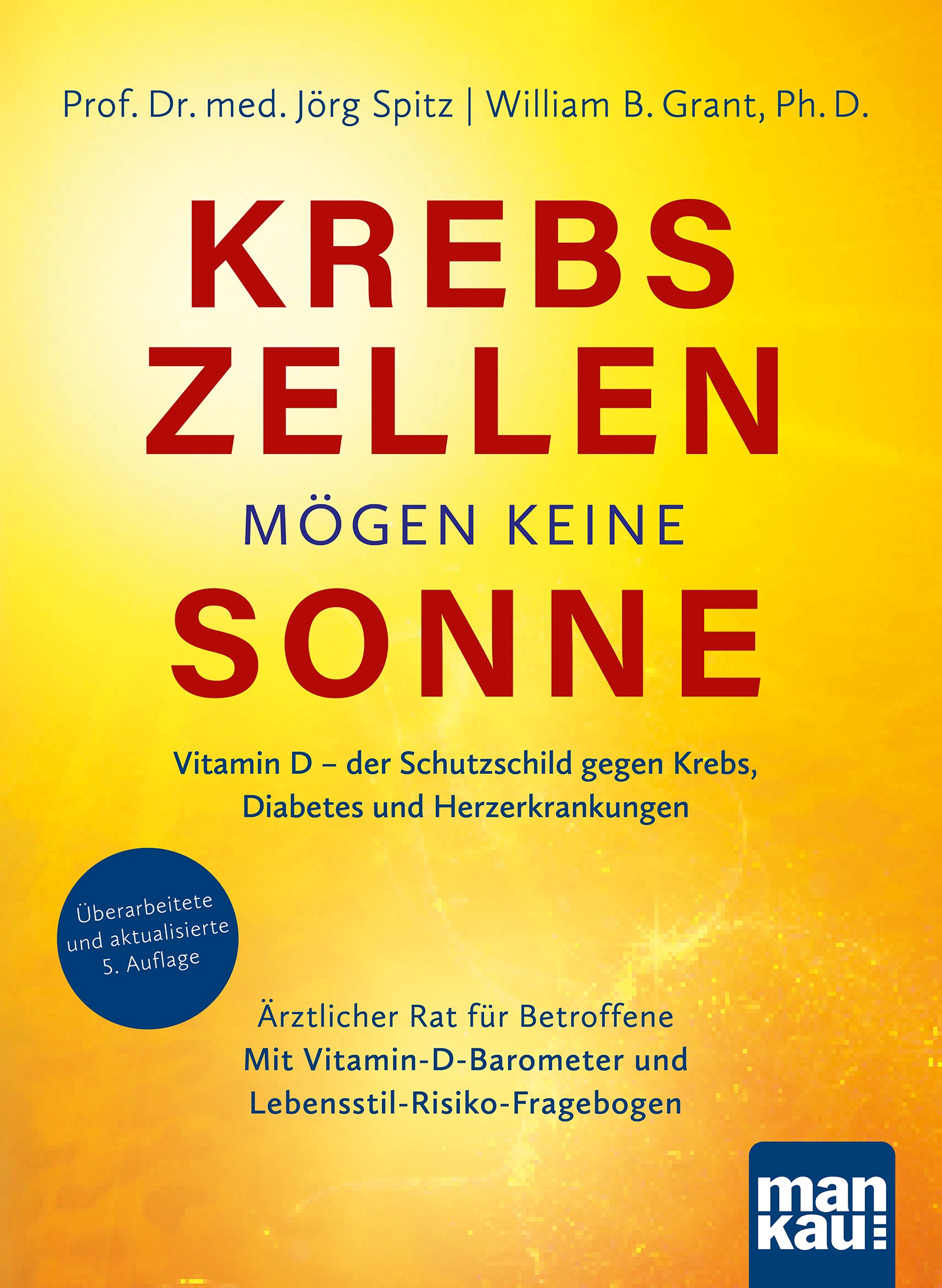
"Vitamin D forms the precursor of a hormone that almost all cells in our body need for their metabolism. Accordingly, a deficiency of the 'sun hormone' affects almost all processes in our organism; this applies to our brain as well as our muscles and our immune system. The simplest and most natural way to get enough Vitamin D is through sun exposure of our skin. There is no reason to be afraid of cancer if you realize that only the dose makes the poison. Those who know the right amount can protect themselves from cancer and other serious diseases with the help of UV radiation!" Since the initial publication of the successful guide "Cancer Cells Don't Like the Sun", which the two Vitamin D experts Prof. Dr. med. Jörg Spitz and William B. Grant, Ph. D., have now presented in its fifth updated and revised edition, the number of scientific studies and publications on Vitamin D has more than doubled – and they all confirm the high importance of the "sun hormone" for our well-being and protection against serious chronic diseases.
Your guide "Cancer Cells Don't Like the Sun" was first published fifteen years ago and is now in its fifth, updated edition. What has happened in Vitamin D research since then, and what new things can readers expect?
Prof. Dr. Spitz: A lot! Before I get to that, however, I would like to refer to another, equally important finding: Almost none of the previous statements about the importance of Vitamin D have had to be revoked! Even the old wives' tale that Vitamin D leads to kidney stones and vascular calcification has finally been put to rest by an extensive meta-analysis. Furthermore, the "Vitamin D community" has succeeded in significantly increasing Vitamin D levels in the age group from about 50-60 years since the first publication of this book in 2010: by 40% by 2017 and – very recently, based on unpublished data – by another 35% by 2023. This means that in this age segment, the average Vitamin D level of 34.7 ng/ml is for the first time above the reference value of 30 ng/ml! Who would have thought that 15 years ago!
Research now confirms the importance of Vitamin D for almost all important bodily functions: the immune system, tumor development, cardiovascular diseases, the central nervous system, and other organ systems. Which findings do you consider particularly groundbreaking?
Prof. Dr. Spitz: There are two very important messages: First, the German Cancer Research Center in Heidelberg – one of the most important institutions in mainstream medicine – has found through an extensive analysis of international publications that the regular intake of Vitamin D could prevent around 30,000 cancer deaths annually if people over 50 years of age take Vitamin D daily! The second aspect is high-dose Vitamin D (according to the guidelines of the Coimbra Protocol) for the successful treatment of autoimmune diseases such as psoriasis and multiple sclerosis. Since the immune system is also very significantly involved in the development and spread of malignant tumors, I assume that the previously described positive effects on the number of annual cancer deaths will be further improved by consistent supplementation (daily, sufficiently high doses, and with the co-factors also described in the book).
In view of the catastrophic long-term consequences of the Corona pandemic, you have added a chapter on the positive influence of Vitamin D on the immune system. How do you assess the possibilities for prevention and therapy of long or post-Covid diseases with the help of Vitamin D?
Prof. Dr. Spitz: At the beginning of the pandemic, I already pointed out in a video on YouTube that a regular Vitamin D level is an excellent protection against viral infections in general. However, in view of the massive discrimination of all dissenting opinions by the "pandemic operators," I then kept my mouth shut! As the extensive international literature on this topic now shows, I was right with my statement at the time. Unfortunately, the topic of post-/long-Covid- and also post-vaccination diseases (which officially do not exist) cannot be addressed with Vitamin D alone. The spike proteins produced (both from the designer virus and the vaccine) can damage virtually all organs and are (so far) difficult to combat.
Where do you actually get enough Vitamin D? And what should you do if you can't tolerate the sun or are afraid of skin damage?
Prof. Dr. Spitz: Sun-exposed skin is the primary source of the sun hormone. However, in our latitudes, this only works between April and September when the sun is high enough. This also applies in summer only between 11 AM and 2 PM. The more skin is exposed to the sun (without clothes and sunscreen), the more Vitamin D is produced. In swimming trunks, a man can easily get 15,000 IU in 20 to 30 minutes. Then you can end the sunbath, as additional time does not produce additional Vitamin D or existing hormone is destroyed again. If you are afraid of wrinkled skin or skin cancer, you can take pharmacologically produced Vitamin D, as has been done for decades to prevent rickets in children. Only the dose has to be adjusted for adults or to body weight.
Sunlight is important for both our physical and mental health. While Vitamin D can also be supplemented, it is even better to expose your skin to natural sunlight in the right (!) amount.
 |
The sun hormone Vitamin D has both a healing and preventive function for a variety of diseases. Which ones, for example?
Prof. Dr. Spitz: In fact, the strength of Vitamin D lies precisely in the prevention of chronic diseases. This applies to all inflammatory processes from rheumatism to psoriasis to inflammatory bowel diseases, to the development of malignant tumors from malignant melanoma to breast and colon cancer, and to practically all diseases of the brain from multiple sclerosis to dementia.
You describe the paradoxical situation that the UV rays of sunlight can cause skin cancer on the one hand, but on the other hand stimulate the production of Vitamin D, which protects against cancer, among other things. How is this to be understood and what is the right dose of sun?
Prof. Dr. Spitz: The key to understanding is the age-old rule: "The dose makes the poison." White skin cancer (e.g., basal cell carcinoma) primarily develops on the face if it is exposed to the sun too much and too often. That's why, contrary to common advice, you shouldn't hold your face in the sun to produce Vitamin D, but rather other parts of the body that usually don't get much sun. Generally, it's enough to expose your arms and legs to the sun for about 15 to 20 minutes two to three times a week – but around midday and not in the morning or evening when the UV radiation is too low. If you want or need to stay in the sun longer, sunburn should be avoided. Clothes are better suited for this than sunscreen, as the latter consists of chemical substances which, like their reaction products formed under sun exposure, are absorbed by the skin and burden the body.
You also see Vitamin D as the key to a "species-appropriate lifestyle" and a holistic health culture. What does this mean, and what reforms of the healthcare system are necessary for it?
Prof. Dr. Spitz: When I started working on prevention about 20 years ago, only a few lifestyle factors were known that were needed to prevent the development of chronic diseases. Since the discovery of epigenetics about 15 years ago, it has been shown that the human body is not controlled by its genes, but epigenetically by the environment in which it lives, i.e., by the most diverse factors in its environment. Accordingly, maintaining our health is not an exclusive medical issue, but a task for society as a whole to (re)create these evolutionary conditions for its members.
|
Current studies show that the number of chronic diseases has continuously increased in recent decades. Due to the increasing negative factors of modern lifestyles, existing risks have been further increased and new risk factors have been created. A "species-appropriate" lifestyle, on the other hand, is the best prerequisite for avoiding diseases and enjoying a high quality of life into old age.
 |
For many years, you have been working on the concept of "peak health," which will be continued in its own foundation starting in 2025. What goal have you set for yourself with this, and what are the current projects?
Prof. Dr. Spitz: The concept of "Peak Health" and the "House of Bright Minds" founded last year as a platform for a new health culture are my conclusions from the research results described above. Since it is difficult for individuals to stay healthy (or become healthy again) in the current social environment, a concentrated advocacy, a lobby for health in our society, is needed. With this "health club" (comparable to the ADAC for motorists), it will be possible to create the necessary conditions for improved and sustainable health in the population. The aim is to give life to the years and not to add additional years to life (with reduced quality of life, as is currently the case). Therefore, all individuals and institutions in our society are called upon to participate in the construction of the "House of Bright Minds"!
 Cancer Cells Don't Like the Sun Vitamin D – The Shield Against Cancer, Diabetes, and Heart Disease Mankau Verlag, 5th revised and updated edition 2025 Paperback, color, 16 × 22 cm, 158 pages ISBN 978-3-86374-764-0 18.00 Euro (D) | 18.50 Euro (A) |
Link Recommendations
More about the book "Cancer Cells Don't Like the Sun" →
To the reading sample in PDF format →
More about author Prof. Dr. med. Jörg Spitz →
More about author William B. Grant, Ph. D. →
To the social networks – for questions, criticism, suggestions →
This might interest you

More articles

According to the symbol experts Christina Baumann and Roswitha Stark, authors of the card set "Homeopathic Symbol Pharmacy: Psyche and Mind" and the book of the same name, healing work with symboli...
Read more
Terri Cole: "Empathy is a beautiful thing – but it shouldn't lead to self-sacrifice!"
"If you’re feeling chronically exhausted or that your relationships are draining you, it’s time to find healthier boundaries and prioritize your own well-being. I want to help you break the cycle o...
Read more
Diverse range of books
We offer a wide range of books on health, self-help and personal development.

Inspiring authors
Our more than 120 authors are experts in their fields and are happy to share their wealth of experience.

Practical guides
Our books and media are practice-oriented and offer helpful tips and instructions for everyday life.

New releases
We continuously publish new books and audio guides that address and delve deeper into current topics.