
Tuning Fork Therapy: "Tuning Fork Balancings heal and protect us!"

Tuning Fork Therapy: "Tuning Fork Balancings heal and protect us!"
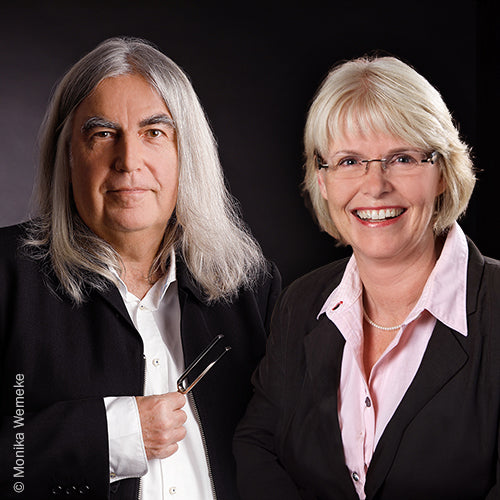
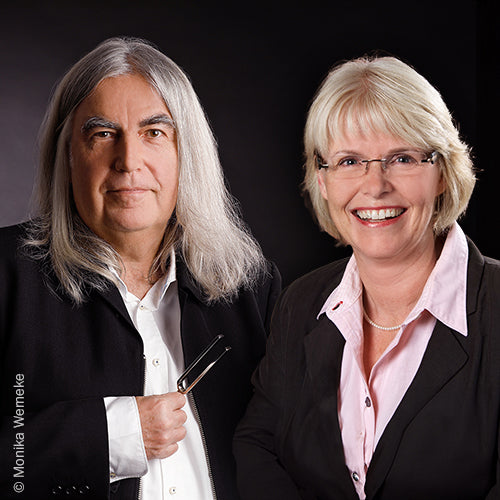
Interview with Phonophoresis expert Thomas Künne and General Practitioner and Naturopath Dr. med. Patricia Nischwitz
"We humans are energy beings, and only when our life energy can flow freely and undisturbed through our organism are we completely healthy. Here, the vibration of tuning forks acts like a prompter: even this gentle impulse can be enough to activate our self-healing powers and thus resolve blockages and complaints. And in the sense of 'salutogenesis,' the preservation of health, tuning fork applications harmonize the energy flow and stabilize body, mind, and soul." Vibration therapist Thomas Künne and general practitioner Dr. med. Patricia Nischwitz, who have compiled a wide range of everyday applications in the expanded new edition of their successful paperback "Tuning Fork Therapy", are convinced that anyone can stimulate the right acupuncture points themselves with the help of the vibrating tuning fork and thus do a lot for their health and well-being.
The successful practical guide to tuning fork therapy is now appearing in its fourth, updated and expanded edition. What has happened since then, and what new applications can readers look forward to?
Künne: We are very pleased that the tuning fork therapy, which we brought into (healthy) life with great commitment and initiative, has now found so many enthusiastic followers, and not only in German-speaking countries. I am aware of translations into Polish and Spanish; recently, I had the pleasure of training a participant from Taiwan. What can readers expect from this expanded edition? We have, of course, retained the tried and tested balancings and supplemented them with others that alleviate mood swings or, from a preventive (salutogenic) perspective, prevent them from arising in the first place. As an extra and special highlight, you will find in the new book the chakra balancing with the important Schumann-II frequency (256 Hz) – as a contribution to well-being in the current Age of Aquarius.
Many of your books are introduced with a foreword by Dr. Ruediger Dahlke. What thematic relationship does tuning fork therapy have to his concepts?
Dr. Nischwitz: With his insights into "Archetypal Medicine," Dr. Ruediger Dahlke has presented a now highly recognized comprehensive work that, in the case of mood swings and illnesses, does not remain on the surface of symptoms but searches for their cause in the depths. He asks which parts (archetypes) of us are not being lived and thus slip into the shadow of illness. Tuning fork therapy is closely linked to "Archetypal Medicine," especially since Thomas Künne is a student of Dr. Ruediger Dahlke. It helps to activate our "inner healer," i.e., our self-healing powers, to make blockages conscious and to resolve them.
You write in the introduction that phonophoresis is "as valuable as ever." What makes this gentle healing method so valuable, and why is it so important right now?
Künne: We live in very challenging times – this applies to the collective and to each individual. Never has this credo been more important and truer: "If we are not at home within ourselves, we are at home nowhere!" This means concretely: If I am almost exclusively on the outside, the interior of our body-house becomes increasingly desolate, our immune system weakens until it collapses. Tuning fork therapy, with its healing vibrations, is uniquely predestined here to establish an effective protective shield against the increasing demands of external "reality" by resonating with the inner healer.
You assume that "discord" and illness are always connected with a disturbed resonance or communication. What does that mean, and what role does the tuning fork play in healing?
Künne: Through external impulses using a tuning fork (via the ear, chakras, meridians, or acupuncture points), we help to (re)activate neglected areas of our body or those that have been pushed into the shadows. Essentially, this is comparable to the assistance of a prompter: often, a single impulse is enough to restart a stalled communication. Because deep within us, we know what is good for us and what is not.
In your book, you distinguish between "pathogenesis" and "salutogenesis." What do these two terms mean, and how do they relate to "phonophoresis"?
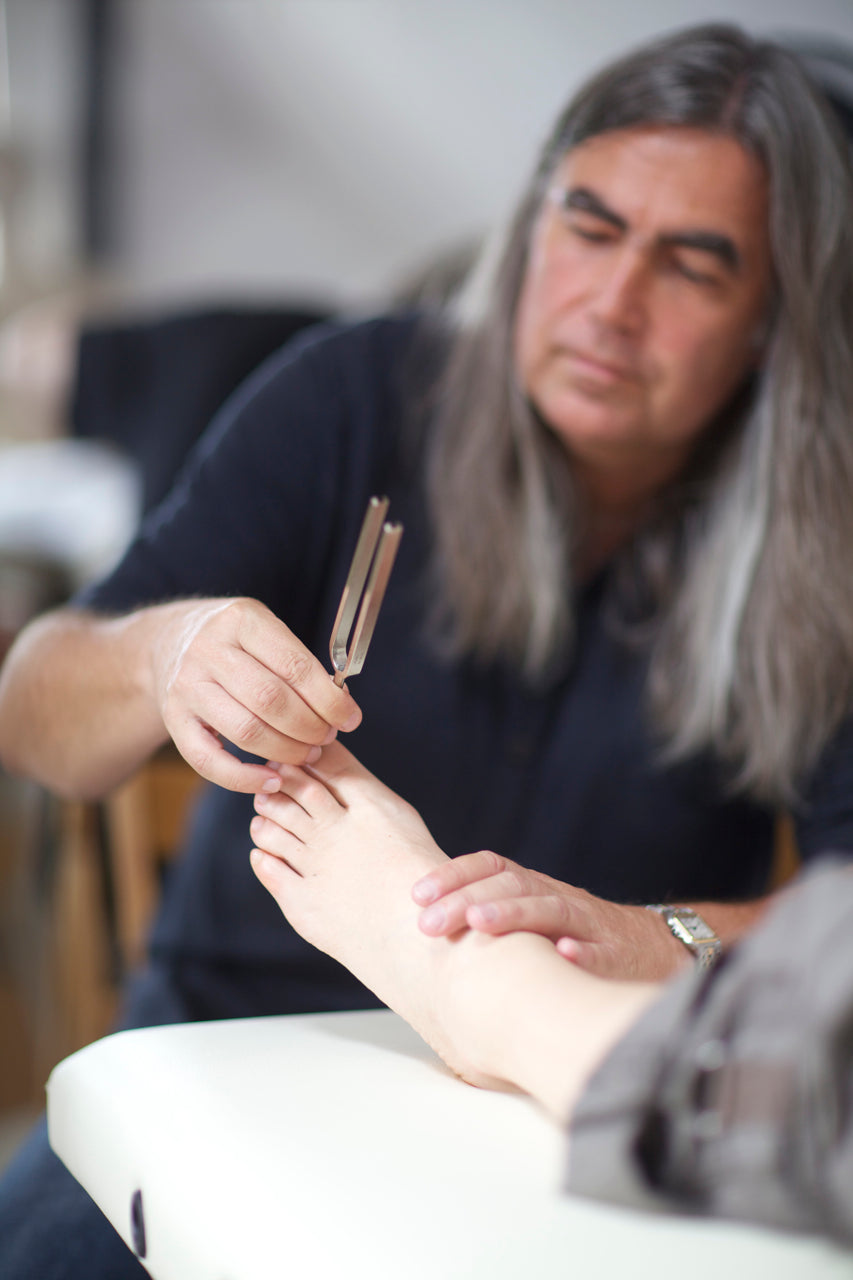
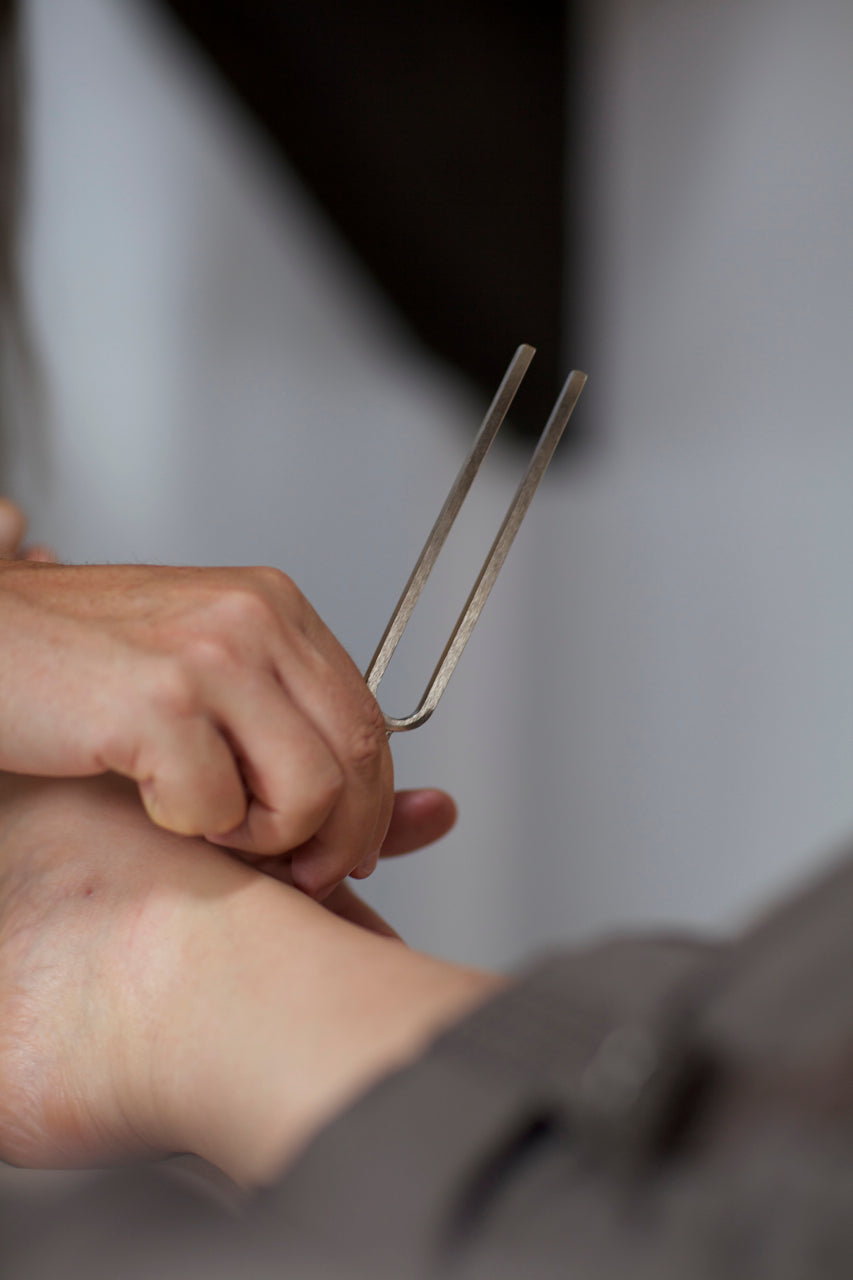
Dr. Nischwitz: Pathogenesis describes the origin and course of a disease. This implies: I want to know what I need to do to get healthy again. Salutogenesis, on the other hand, describes how health arises and how it can be maintained. This raises the question: What can I do to stay healthy? Well, in both cases, you can do something; logically, however, our organism has much less work to do to maintain a good state than to reverse a bad one. Our body is actually very clever and knows what it needs and what to do, but we often don't want to or can't "listen" to what our system tells us, but instead block it. Therefore, we need a kind of activator; the idea behind tuning fork therapy is to give our body system an impulse for optimal functioning, self-healing, or harmonious self-regulation by activating acupuncture points. In contrast to classical acupuncture with needles, a tuning fork balancing (phonophoresis) can be performed simply by oneself and represents a very gentle stimulus.
With the described tuning fork balancings, you show how easily and effectively one can treat oneself and others for everyday complaints. For which ailments is this healing method best suited?
Dr. Nischwitz: Basically, any illness can be treated with this healing method. There are no contraindications. The treatment is particularly helpful for discomforts when conventional medicine says: "You are healthy," but you don't feel that way. Conventional medicine does not attribute disease value to "mood disturbances" or knows no meaningful treatments. Here, tuning fork therapy offers a wide range of possibilities to do something for oneself. However, one must be aware that there are diseases that require conventional medical treatment, and one should not naively say: "I don't need it"! But supporting the system and one's own healing powers is always useful, even in addition to conventional medical treatment. Then a therapy can often work better and faster.
The proposed balancings support self-help. Nevertheless, you warn against careless use without consulting an experienced doctor or naturopath. For which diseases is tuning fork therapy not advisable?
Dr. Nischwitz: In principle, tuning fork therapy cannot cause any harm. However, in individual cases, it can happen that even a gentle stimulus is too much for an organism and symptoms worsen. Then the therapy must be adapted individually or another form of therapy must be chosen. Our warning, however, primarily refers to not believing that one can heal everything with the tuning fork alone; serious diseases such as diabetes or cancer must of course be subjected to the appropriate, necessary medical therapy. But even in these cases, the organism can be supported with the help of gentle balancings.
In describing various symptoms from A for allergies to Z for toothache, you also shed light on the associated symbolism. What deeper meaning can typical everyday complaints have?
Künne: We humans are energy beings and the physical body is essentially the shell. This means that if our life energy – called Qi or Chi in Chinese – can flow freely and harmoniously, then we are completely healthy, in body and soul. Conversely, constriction, blockages, and a stagnation of this energy manifest as discomforts leading to illnesses, first in the emotional, then in the physical realm. Our conventional medicine, whose success I do not wish to diminish, unfortunately often has too superficial a view. It predominantly looks for "errors" (in the broadest sense) in the structure; usually, only what is measurable or quantifiable counts. Unfortunately, there is a lack of understanding for the holistic connections, precisely because these are not measurable and we cannot yet grasp many things with our senses. I admit that it took me years to reach this understanding myself. But it makes sense to question: What does this illness or complaint actually want to tell me? Sometimes it is quite obvious, sometimes it is deeply hidden. We want to provide food for thought, especially when certain complaints keep recurring. Because here there is the possibility to work on the cause – once it has been recognized.
The vibration of the tuning fork provides a therapy form that is as gentle as it is effective, similar to Traditional Chinese Medicine. What cross-connections exist between these holistic approaches and where do the differences lie?
Künne: TCM has the holistic view just mentioned; there is no separation between body and soul. This is also our basis when we work with the tuning fork. As explained above, the free flow of energy is the prerequisite for health. With the vibration of the tuning fork, a corresponding harmonization of the energy flow through the system is to be achieved. We use the acupuncture points from Chinese medicine, which have proven to be extremely effective through thousands of years of experience.
Dr. Nischwitz: And here we have the difference to the Chinese way of treatment: Chinese medicine is effective, but not necessarily gentle. In China, points are needled or heated and thus sometimes massively manipulated; the number of treated points is also many times higher than with us. For us Western Europeans, this intensity of stimulation is often too much, and our system can collapse. With gentler forms of stimulation, we are much better served, then our organism can react and ideally adjust to an optimal vibration for it.
Book Recommendation:
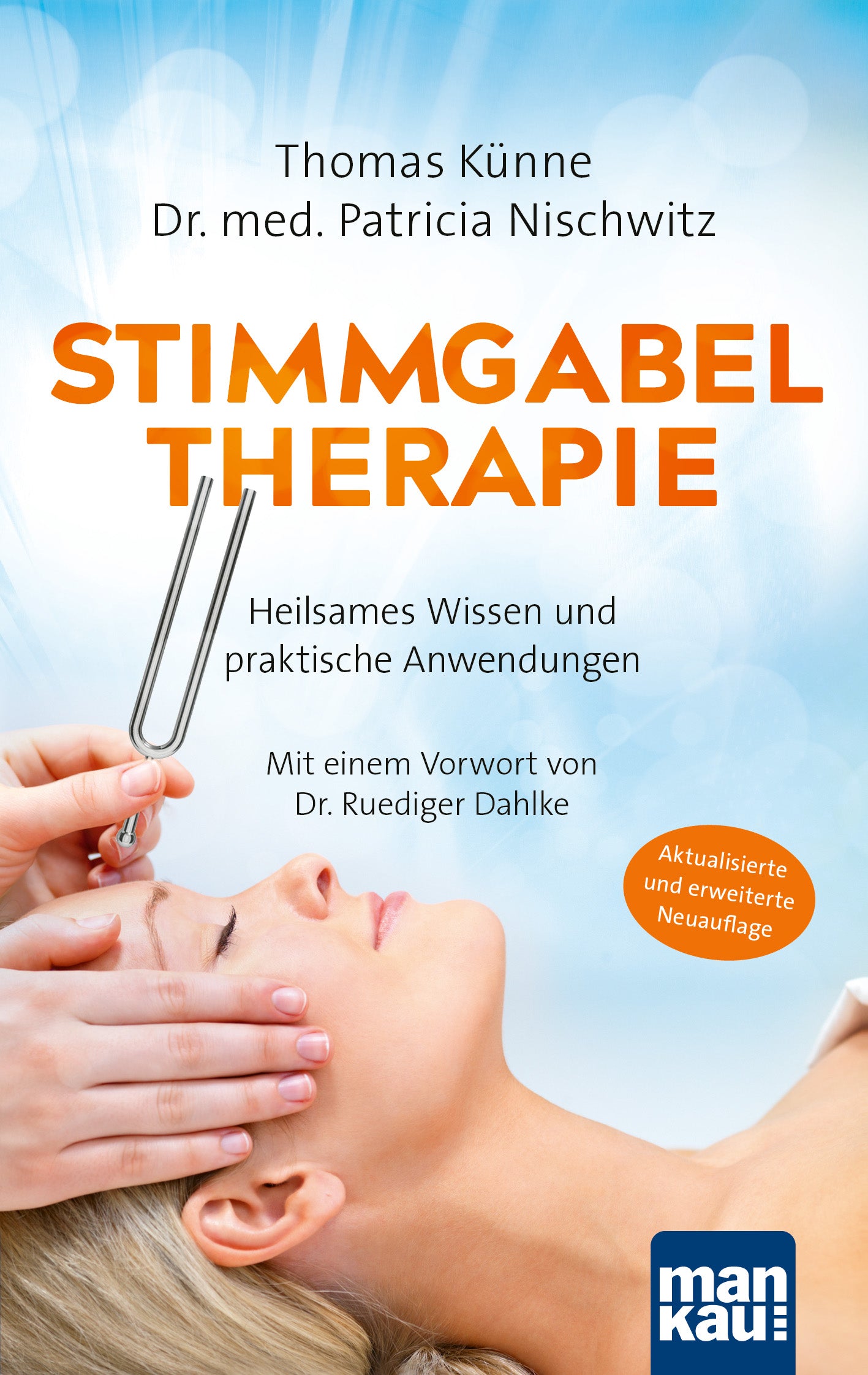
Thomas Künne and Dr. med. Patricia Nischwitz: Tuning Fork Therapy. Healing knowledge and practical applications. With a foreword by Dr. Ruediger Dahlke. Mankau Verlag, 4th updated and expanded edition September 2024, paperback, 12 × 19 cm, 239 pages, 12.90 Euro (D) / 13.30 Euro (A), ISBN 978-3-86374-743-5
Link Recommendations:
Further information on the paperback "Tuning Fork Therapy"
More about author Thomas Künne
More about author Dr. med. Patricia Nischwitz
To the internet portal stimmgabeltherapie.de
Our social networks – for questions, criticism, suggestions
More articles
“When we foster open communication and a sense of self-agency in children, they are less likely to rebel in risky ways,” says the experienced child psychologist. “So, we protect our children more b...
Read more
"At a time when many people suffer from speechlessness - be it due to personal traumas or societal divides - we need new ways to touch the unspeakable. '50 Words for Love' is aimed at readers who a...
Read more
Diverse range of books
We offer a wide range of books on health, self-help and personal development.

Inspiring authors
Our more than 120 authors are experts in their fields and are happy to share their wealth of experience.

Practical guides
Our books and media are practice-oriented and offer helpful tips and instructions for everyday life.

New releases
We continuously publish new books and audio guides that address and delve deeper into current topics.