

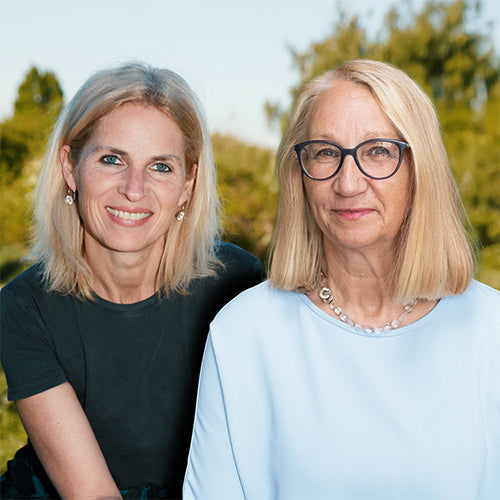
Maria M. Kettenring and Jasmin Schlimm Thierjung: "Nature is our reliable companion and personal source of strength in turbulent times."

Maria M. Kettenring and Jasmin Schlimm Thierjung: "Nature is our reliable companion and personal source of strength in turbulent times."
Interview with the renowned aroma expert and the founder and director of the "German Academy for Forest Bathing and Health"
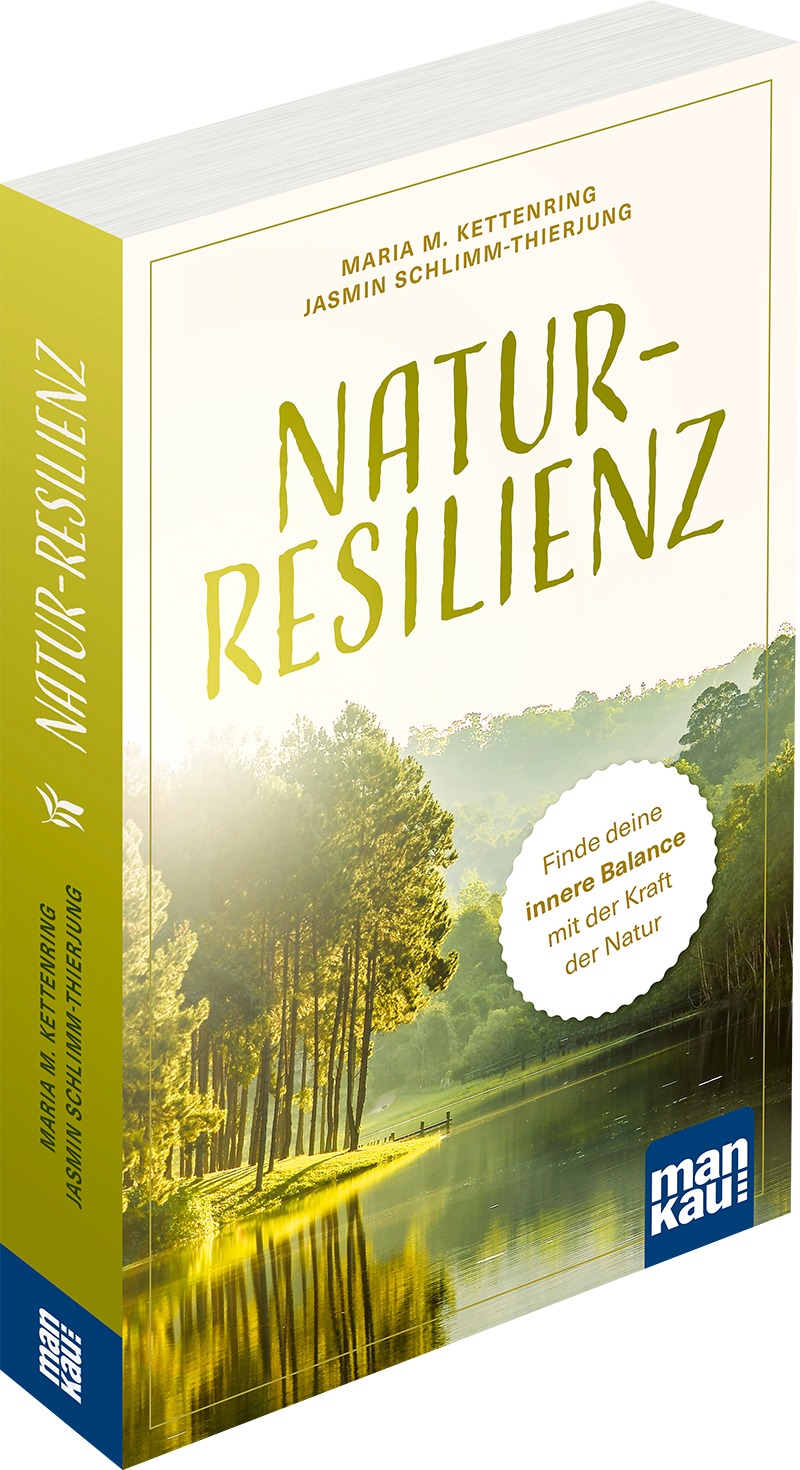
"In nature, we find solace and inspiration to face life's challenges with courage and determination. Numerous studies show that spending time in the forest strengthens our immune system, reduces stress, and promotes our mental health. Let's use this great gift: consciously designed moments in nature can give us health, serenity, and lightness." The well-known aroma expert and trainer for forest bathing and nature resilience Maria M. Kettenring and Jasmin Schlimm-Thierjung, founder and director of the German Academy for Forest Bathing and Health, want to encourage the activation of new power resources through healing nature experiences and consciously designed daily rituals with their joint book "Natur-Resilienz. Finde deine innere Balance mit der Kraft der Natur" (Nature Resilience. Find your inner balance with the power of nature).
For some time now, the term "resilience" has been used to describe the ability to remain mentally healthy despite crises, difficult life circumstances, or stressful situations. What do you understand by "Nature Resilience"?
Maria M. Kettenring: In turbulent times like these, we need nature as a reliable companion by our side. In its embrace, we find comfort and inspiration to face life's challenges with courage and determination. Nature opens our eyes to the hidden treasures within ourselves. It stimulates our imagination and awakens our willingness to change. It encourages us to grow beyond ourselves and open up to new horizons. With every step in nature, we discover more of our inner potential and gain the strength to realize our dreams. The success story of resilience began with research into factors that enable children to become successful adults despite adverse life circumstances. Emmy Werner is considered a pioneer, even though she was not the first to dedicate herself to this topic in long-term studies. The first mention of the term "resilience" is attributed to psychologist Jack Block.
You describe the foundations of nature resilience with the image of a tree. What do its trunk, crown, and roots represent, and what principles are important for implementing this in everyday life?
Jasmin Schlimm-Thierjung: First, we have the roots: In a tree, they penetrate the soil, providing stability and support, supplying water and nutrients. Thus, the root area represents the soul, feelings, and sensitivity. The roots symbolize the way a person approaches something, how they experience it, and how they see themselves and others. The tree trunk forms the stable framework and represents the connection channel between roots and crown. In humans, the life channel is formed by the spine and spinal cord. The spine holds a person upright like a trunk and gives them stability. All being is stored within it – what I am, and what I want to be. The tree crown spreads out as it grows, and its branches produce new leaves and fruits after each winter. In the same way, our mental resilience should bear "blossoms and leaves" for more serenity, happiness, success, security, health, and much more that we wish for our lives. For practical implementation in everyday life, focusing on the seven roots of resilience helps us: acceptance, mindfulness, self-efficacy, optimism, relationship cultivation, goal-oriented action, and creative problem-solving.
Nature is not a romantic backdrop but is also considered a serious resource for health in medicine. What health-promoting or therapeutic impulses can nature offer?
Jasmin Schlimm-Thierjung: Spending time in the forest strengthens the immune system, reduces stress, and promotes mental health. There is already extensive scientific evidence for this. Nature experiences increase well-being and can even support recovery after operations. Likewise, research has shown that patients with chronic illnesses benefit from time spent in nature. The positive effects of nature experiences on children's resilience and cognitive development have also been repeatedly investigated. All these studies can be found on our homepage if interested.
 We humans intuitively know that spending time in nature does us good. It does not serve as a romantic backdrop but rather as an active co-regulator for our mental and emotional balance and for our health. "Nature Resilience" is not escapist, as Dr. med. Michael Jeitler from Berlin's Charité emphasizes in his preface – it is not about escaping reality for an hour. Rather, the approach aims to activate resources that then "feed back" into our everyday lives, be it in the family or at work. |
Since antiquity, cultures from all over the world have emphasized the deep connection between humans and nature. From what traditional understanding of nature can our modern civilization particularly benefit?
Maria M. Kettenring: Our modern civilization can particularly benefit from the holistic, respectful, and relationship-oriented understanding of nature found in indigenous cultures. This traditional worldview, passed down through generations, sees humans not as rulers but as an integral part of a living ecosystem.
"Nature Resilience" promises to teach how to perceive the environment with all senses and build a mindful relationship with it. With what exercises and rituals can this be achieved?
Jasmin Schlimm-Thierjung: A great strength of our book is certainly its methodological diversity. We combine impulses from naturopathy and Eastern wisdom traditions into a holistic program of self-care. This includes techniques for mindful movement and relaxation – such as forest bathing, water applications, and nature retreats – as well as creative approaches, including journaling, LandArt, and many more. For all these techniques, there are also concrete exercises and instructions for everyday life. As a recognized aroma expert, Maria has contributed a special focus: the power of scents. The book presents 30 proven essential oils and offers numerous recipes for their use in everyday life and in the "aroma kitchen." We thus hope that "Nature Resilience" will be a practical treasure trove for anyone who wants to establish small daily rituals and experience and use nature with all five senses as a personal source of strength.
 Maria M. Kettenring's inspiring "scent portraits" present the significance and application possibilities of proven essential oils. Ginger oil, for example, has a balancing, nerve-strengthening, grounding, calming, and at the same time invigorating effect; it conveys warmth, security, and emotional stability. In Ayurveda and Traditional Chinese Medicine, ginger has been considered a universal remedy for harmonizing body and mind for millennia. Ginger oil not only relieves digestive problems on a physical level – it also unfolds its healing effect in cases of "emotional stomach ache," when stress, worries, or emotional burdens upset our stomach. |
As mentioned, Ms. Kettenring is a recognized aroma expert and "scent ambassador," and Ms. Schlimm-Thierjung founded the German Academy for Forest Bathing and Health. How did you both come together for this project, and how do your different experiences reflect in the practical work on the "Nature Resilience" project?
Maria M. Kettenring: We found each other through training at the German Academy for Forest Bathing and Health; the connection between forest bathing and nature resilience laid the foundation for our collaboration. Through professional exchange at congresses and lectures on forest medicine, the shared idea grew over two to three years to combine our expertise in a book project. In practical work, we now bring together scientific findings on terpenes and the resilience roots of nature with the valuable methods of aromatherapy and aroma cuisine.
 Maria M. Kettenring |
Link recommendations
More about the book "Natur-Resilienz" →
To the reading sample in PDF format →
More about author Maria M. Kettenring →
More about author Jasmin Schlimm-Thierjung →
Our social networks – for questions, criticism, suggestions
This might interest you
More articles
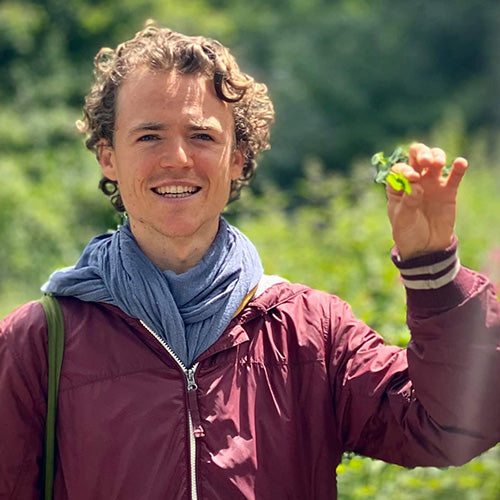
Philip Kunisch: "Nature awaits eyes that see it!"
Herbalist Philip Kunisch, author of the compact guide "Edible Medicinal Herbs and Wild Plants", considers it extraordinarily valuable, especially for us modern people, to rediscover the ancient kno...
Read more
Dr. Kyra Bobinet: „Als ‚MacGyvers‘ unseres eigenen Verhaltens werden wir immun gegen Misserfolge!“
„Unsere Habenula fungiert als eine auf das Überleben ausgerichtete ‚Bremse‘ für Verhaltensweisen und wird aktiv, wenn sie etwas als ‚gescheitert‘ wahrnimmt. ‚Scheitern‘ ist jedoch keine Tatsache – ...
Read more
Diverse range of books
We offer a wide range of books on health, self-help and personal development.

Inspiring authors
Our more than 120 authors are experts in their fields and are happy to share their wealth of experience.

Practical guides
Our books and media are practice-oriented and offer helpful tips and instructions for everyday life.

New releases
We continuously publish new books and audio guides that address and delve deeper into current topics.